When people plan a website, they plan a lot of pages. A page for the team, a page for the history, a page for the philosophy, a gallery, an FAQ, a resources hub. Then they run out of steam around page three, and the site launches half-empty. Or it never launches at all.
Here's what almost nobody tells you: a small business needs about five pages. Do those five well and you'll out-convert a competitor who has thirty.
Start from what the customer needs, not what you want to say
A visitor lands on your site with one of a few questions in mind. Do you do the thing I need? Can I trust you? What will it cost, roughly? How do I reach you? Every page you build should answer one of those. If a page doesn't, it isn't helping. It's just one more thing for the customer to scroll past.
"A confused visitor doesn't email you for clarification. They hit the back button and click your competitor."
The five pages
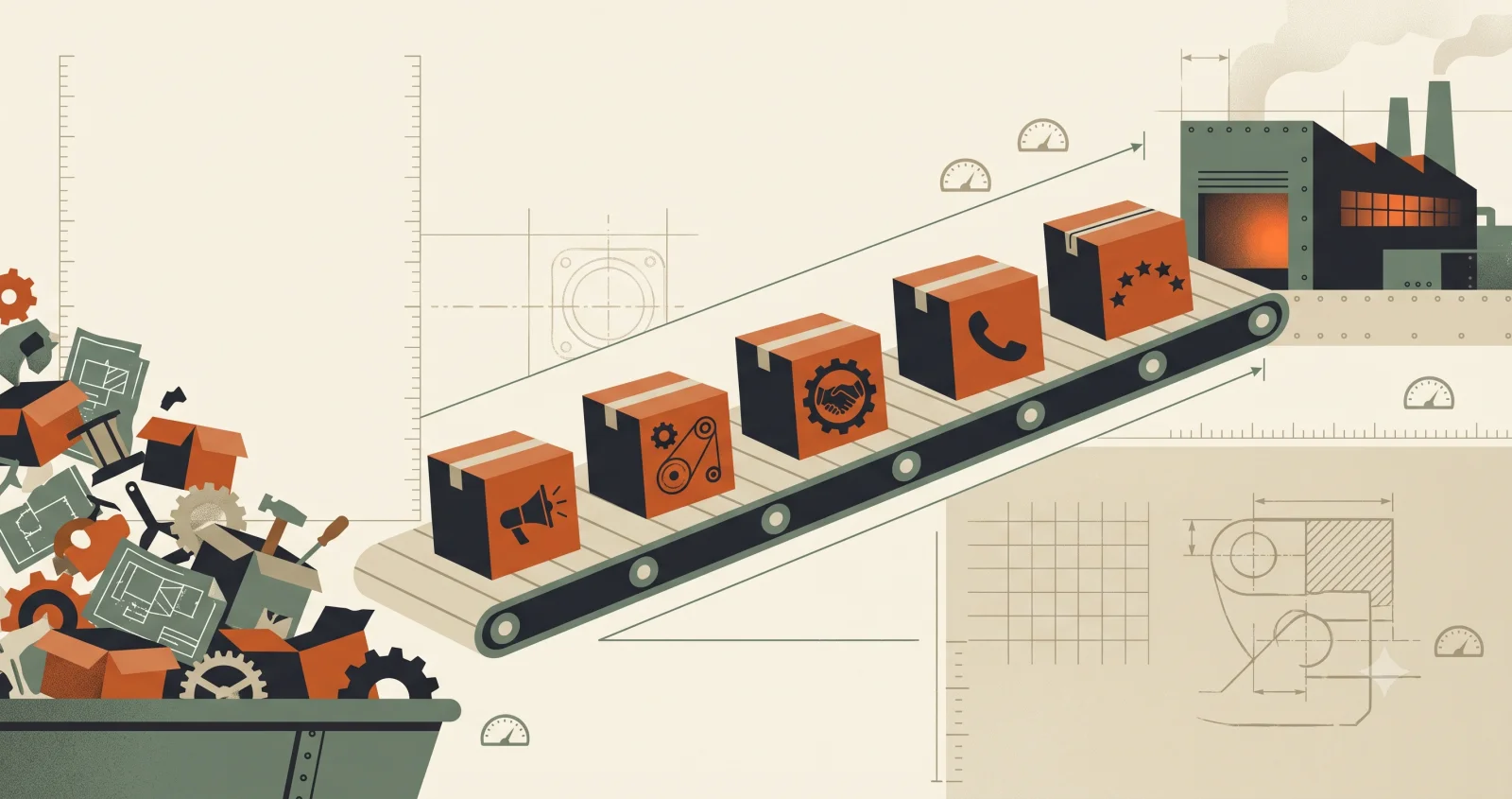
- Home. The thirty-second pitch: what you do, who it's for, why you, and a clear next step. Not your life story. The trailer, not the movie.
- Services. What you offer, ideally with one page per core service so each can rank on Google and speak to one kind of customer.
- About. Proof you're real and worth trusting: who you are, where you work, why you started. People buy from people.
- Contact. Absurdly easy to act on. A short form, a phone number, an email, your service area. Don't make anyone hunt.
- Proof. Reviews, before-and-afters, past work. This is the page that turns "maybe" into "let's talk."
That's it. A blog earns a sixth spot if you'll actually keep it fed, because it's how you show up for the questions people Google before they're ready to buy.
Why lean wins
Every extra page is another thing to write and keep current, and another fork in the road where a visitor wanders off instead of contacting you. Fewer, sharper pages are easier to build and far easier for a customer to move through. When in doubt, cut the page that isn't pulling its weight.
Your first move
Sketch your site as exactly five boxes. For anything you were about to add, ask which of the customer's four questions it answers. If the answer is "none," it can wait. Better yet, it becomes a blog post instead of a permanent page.